English
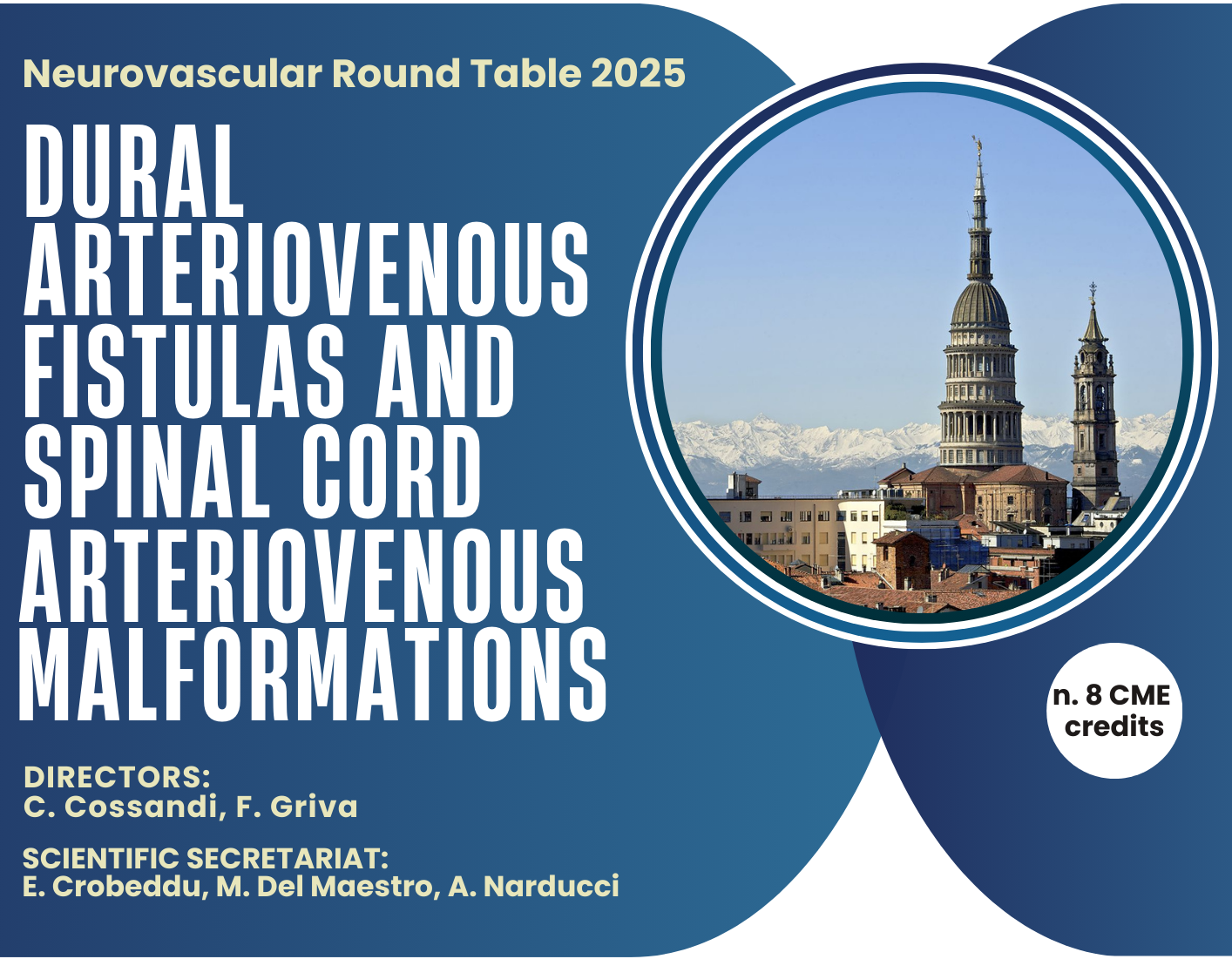
NEUROVASCULAR ROUND TABLE 2025
Dural Arteriovenous Fistula and Spinal cord arteriovenous malformation, Novara 30 maggio 2025
Dural arteriovenous fistulas (DAVFs) and spinal cord arteriovenous malformation (sAVM) are unusual, dynamic, vascular pathologies consisting of multiple high-flow dural arteriovenous shunts.
Each DAVFs and sAVM are unique in terms of location, size, angio-architecture, and flow characteristics, so the correct treatment is extremely challenging. More recent studies have shown that inflammation is associated with their genesis, growth and rupture. Borden and Cognard grading system are widely used to define hemorrhagic risk and to suggest treatment modality in DAVFs. For sAVMs, the risk of spinal cord ischemia and progressive neurological deterioration is significant. The possibility of treatment of these vascular anomalies is crucial to prevent further neurological damage, improve the patient’s quality of life by alleviating symptoms, reduce the risk of catastrophic events such as intracranial or spinal hemorrhage and halt the progression of myelopathy in spinal AVMs, preserving motor and sensory functions.
The interventional treatment options include microsurgery and endovascular embolization.
The appropriate treatment modality requires balancing the risk of complications against the risk of hemorrhage during the natural course of the pathology. Moreover, when treatment is indicated, the goal must be a full cooperation of the multidisciplinary team .
Tailored strategies of treatment are necessary for the management of DAVFs and sAVMs. Our meeting is based on sharing expertise, successes and drawbacks of several high-volumes centers and this would represent an opportunity of update and discussion about these controversial topics.